A Parent’s Guide About Cambridge Curriculum: Board, Pathways and Benefits
When it comes to making arrangements for your daughter’s future-oriented educational setup, selecting the right school depends on selecting the right curriculum. Given the choices of curriculum programmes like Cambridge, IGCSE, CBSE, and IB that are prevalent throughout India, knowing what each board offers is crucial.
For parents exploring Cambridge education in particular, this guide unpacks everything about Cambridge curriculum, from its structure and pathways to its long-term academic value and wider developmental benefits.
What Is the Cambridge Curriculum?

Understanding the Cambridge Board
To truly understand about Cambridge curriculum, it helps to begin with its foundation:
The Cambridge Assessment International Education (CAIE), formerly called Cambridge International Education, which is a division of the University of Cambridge, is one of the largest organisations in the world that provides Cambridge curriculum globally to children aged 3 to 19.
It is a non-teaching department of the University of Cambridge and operates as a not-for-profit organisation. Its focus remains on academic excellence rather than commercial outcomes.
Cambridge curriculum is one of the most well-known versions of the British curriculum, which is currently taught in more than 160 nations. Its qualifications are accepted by leading universities across the UK, the US, Australia, and beyond, giving students access to global opportunities.
Being the first British international boarding school for girls in India, we at Bedford School Mohali have chosen the Cambridge curriculum for a number of reasons. Let’s learn more about this and along with how it differs from other boards.
Cambridge vs Other Education Boards

When we put them next to each other, it becomes much easier to see how they are different. Here’s a structured comparison to help you figure out what really works with your child’s learning style and future plans:
| Aspect | CBSE (Central Board of Secondary Education) | ICSE (Indian Certificate of Secondary Education) | IB (International Baccalaureate) | Cambridge International |
|---|---|---|---|---|
| Curriculum Style & Focus | It is a national system of education with a strong stress on Science, Mathematics, and competitive examination training programmes like JEE and NEET. The process of learning mainly revolves around the syllabus, textbooks and exams, though competency-based reforms are evolving. | A national educational programme that provides a more conceptual approach towards learning with special stress on languages like English, Humanities and Sciences. The system of learning provides projects and other activities making it much more academically extensive. | A global educational program that gives much importance to analytical skills like critical thinking and research work and other aspects like theory of knowledge, extended essay, and CAS (Creativity, Action and Service). | It is an international, subject-focused system that emphasises analytical thinking and application. The programme comprises a modular structure and external assessments of examinations like IGCSE and A levels, with a strong focus on independent learning. |
| Flexibility & Subject Choices | This board offers limited flexibility with fixed streams such as Science, Commerce, and Arts. The students have a defined route of subjects to study. | Provides moderate flexibility, where the students can explore deeper into the subjects they choose, but there is no deviation from the structured streams. | Highly flexible, where the students can select any six subjects from various groups. This encourages a balanced and interdisciplinary approach. | Offers very high flexibility, where the students can select subjects according to their strengths and interests, including combinations across sciences, arts, and languages. |
| Difficulty & Assessment Style | Considered easier to score well in, with consistent patterns in exams. It focuses more on application-based questions, making it perfect for competitive exam training. | Academically challenging, especially in languages and humanities. It covers both descriptive answers and project-based assignments. | Difficult from an educational perspective with project, continuous, and research-based evaluations. It develops critical thinking and writing abilities. | It is renowned for its profundity and clear concepts. Its evaluation is comprehensive and standardised worldwide, emphasising comprehension, analysis, and problem-solving. |
| Global vs Indian Recognition | It is widely popular in India and accepted internationally, although not always the preferred board for top international universities. | Well-recognised within India and moderately accepted abroad, but still not yet the preferred board in most of the international universities. | Highly recognised worldwide and well-regarded in most of the leading universities of the USA, the UK, and other countries of Europe. | Popular internationally, especially the A-level programme, which is popular worldwide amongst leading universities. |
| Availability & Practical Fit | It is the most extensively used board in India, having more than 27,000 schools. This board is generally affordable and ideal for students targeting Indian entrance exams. | It is offered in about 2,700 schools and provides a good curriculum that includes affordable tuition fees and emphasis on language skills. | This board is available in a few elite schools in India, with higher fees. It is suitable for those who wish to pursue their education abroad. | It is offered in about 650 schools in India and provides a good mix of international education and assessment systems. |
| Best Suited For | Students preparing for competitive entrance examinations in India and an academic setting with affordable education. | Students who prefer conceptual depth and strong language skills within an Indian academic framework. | Students targeting top global universities and seeking a holistic, research-driven education. | Students who thrive in a liberal environment with an array of subjects and opportunities for international exposure and a curriculum that builds analytical thinking and academic independence. |
The real issue isn’t about finding out which board is “better”, but rather which board suits the child’s style of learning and future goals. This is another reason that highlights the superiority of the Cambridge system for those who seek to have an academically deep yet flexible education system within the British Curriculum format.
Cambridge Learning Pathways
One of the most distinguishing features of the Cambridge curriculum is its structured yet flexible progression:
Early Years Foundation
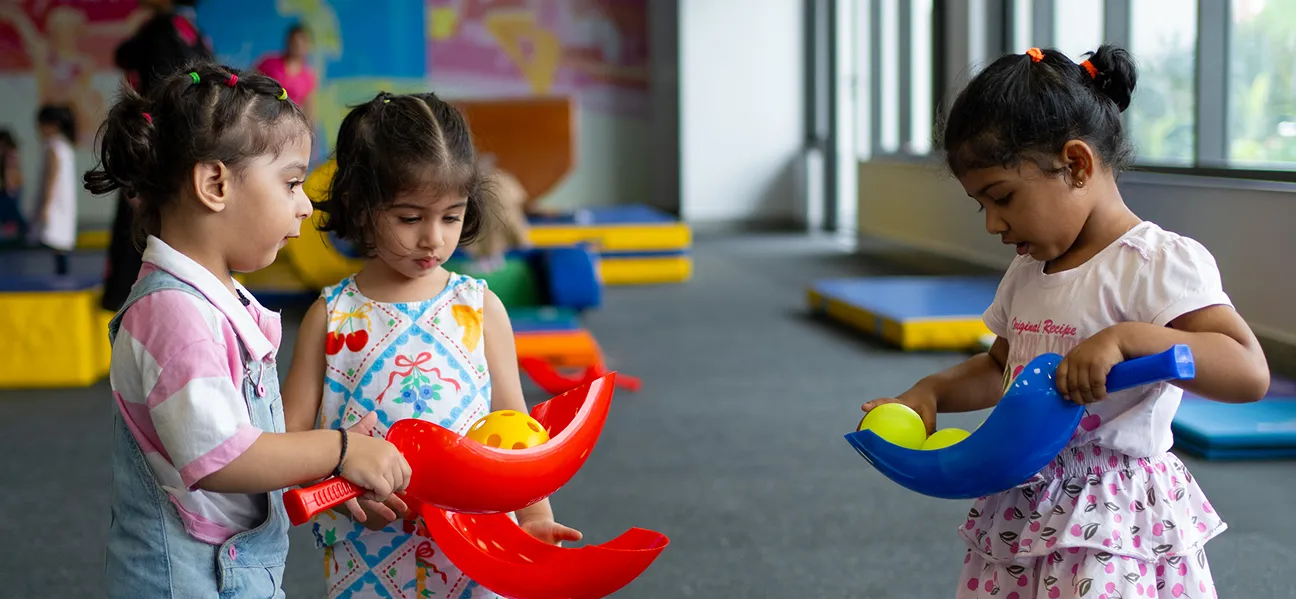
One starts off on the Pre-primary school level when one is aged between 3 and 6 years. This level is not meant to introduce one to formal academic lessons. Its role is that of laying a foundation for the future learning experiences.
- Through this curriculum, children are exposed to activities which enable them to learn through play and imagination.
- Areas covered include language development, physical development, emotional well-being and problem-solving skills.
- At this stage, children are not taught alphabets and arithmetic skills alone. They develop the ability to learn by exploring their environment. From a very tender age, one learns how to learn, which will be helpful as the learner continues along the Cambridge pathway.
Here parents often begin to see how a strong foundation can later support success in a well-structured boarding school for girls.
Cambridge Primary
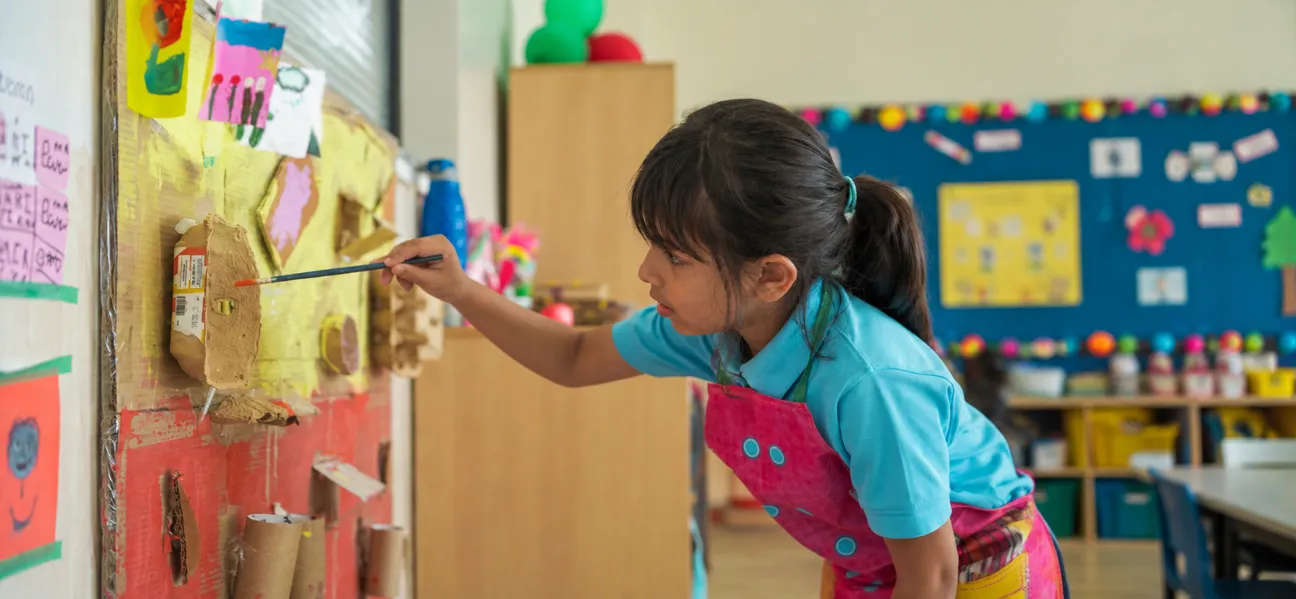
The Primary school level caters to children from ages 5 to 11 and provides organised lessons but still keeps the curiosity factor alive.
- Subjects covered include English language, Mathematics, Science, among others, and additional subjects depend on the school offering the programme.
- Developing literacy and numeracy skills and fostering analytical thinking are key learning objectives at this stage.
- There is no sole assessment tool at this stage, but tests such as the Cambridge Primary Checkpoint aid in tracking progress and highlighting strengths and weaknesses.
The distinguishing feature of the British curriculum at this level is the need to comprehend ideas and concepts without just rote memorisation. Children are encouraged to develop critical thinking skills by asking questions, forming their opinions, and participating in the learning process.
These are critical years for most families as they shape the habits and confidence that prepare their daughter for a high-quality boarding school for girls.
Lower Secondary Stage
The Cambridge Lower Secondary Programme usually encompasses the ages 11 to 14 and is considered a stepping stone from basic learning towards specialisation.
- Curriculum subjects gain structure, involving deeper exploration of ideas in English, Math, Science, and other subject areas.
- It is during this stage that learners develop the skills of independent study, which include researching, analysing, and critical thinking.
- Through assessments like the Cambridge Lower Secondary Checkpoint, one gains knowledge of how they are performing academically compared to others internationally.
This stage is very important because it gets students ready for the hard work of the next level while also encouraging their curiosity and self-assurance.
Upper Secondary (IGCSE)
The upper secondary level consists of the Cambridge IGCSE (International General Certificate of Secondary Education), which is usually taken by pupils who are between the ages of 14 and 16. This programme is among the most popular ones internationally and is an important part of what parents consider while discussing Cambridge curriculum.
- There are over 70 subjects available for selection by the learners, providing great flexibility.
- The course enables the learners to concentrate on their skills and areas of interest, ranging from sciences to humanities, from languages to arts.
- Examination includes both theoretical and practical aspects of the learning process, including written exams and coursework.
- The IGCSE level improves conceptual understanding and prepares the pupils for further studies.
The IGCSE stage helps students understand concepts better and get ready for harder academic work. It also lets them choose how they want to learn.
Advanced Level (AS and A Levels)
Cambridge Advanced is the final level of the Cambridge Pathway and is for students between the ages of 16 and 19. It has Cambridge International AS and A Levels, which are well-known and respected by colleges and universities all over the world.
- Schools can choose from 55 subjects and offer them in almost any combination. This lets students focus on one subject area or study a wider range of subjects based on their strengths and future plans.
- Cambridge International AS Level is typically a one-year course, while A Level is usually The Cambridge International AS Level course usually lasts one year, while the A Level course usually lasts two years. In some subjects, the AS Level course can be extended to a full A Level.
- The curriculum helps students learn a lot about a subject, think for themselves, use logic, speak and write clearly in English, and use what they know in both familiar and new situations.
At this point, the British Curriculum gets more focused and self-directed, which helps students gain the academic depth, confidence, and judgement they need for college and jobs around the world.
Benefits of the Cambridge Curriculum
Choosing a global education system comes with distinct advantages:
- Worldwide Acceptance: The Cambridge qualifications are recognised internationally in educational institutions and companies. Thus, students gain global exposure free from any constraints.
- Practical Skill-based Approach: The curriculum stresses the development of practical skills. Students learn not only how to memorise but also how to apply knowledge.
- Diverse Subject Selection: Having many options when it comes to subject choices, students will be able to design unique curricula tailored to their needs and future career path.
- Strong Academic Background: Since there is an emphasis on concepts, students get an excellent foundation for the future.
- Preparation for Future Life: Apart from academic success, the British Curriculum equips students with confidence, communication, and self-sufficiency.
Why School Choice Matters as Much as Curriculum Choice
Another great thing about the Cambridge curriculum is how it focuses on holistic learning. Not only does it emphasise academic excellence but also instils self-confidence, inquisitiveness, independent thinking, and self-awareness in students right from an early age to higher levels of learning.
The philosophy of holistic education is not only embraced but also incorporated in all aspects of our educational institution.
Our educational journey begins with a nurturing Pre-primary school experience and continues on with a structured Primary school educational process. We seek to provide a healthy balance between academic success and personal growth. Our objective is for every child to understand not only her studies but also herself as a confident communicator and critical thinker.
As a boarding school for girls, this approach acquires greater importance. Girls are given an environment in which they can realise their true potential, feel ownership of their learning process, and gain leadership skills in an organised manner. The environment ensures that the British curriculum is fully supported in this respect so that it can achieve its full potential in terms of instilling independence and global consciousness.
The journey through the Cambridge pathway at Bedford School Mohali follows a similar pattern. It is not merely about progression through different stages but ensuring that students emerge as well-prepared individuals ready for the world awaiting them.
Final Thoughts
Understanding about Cambridge curriculum system is not only about comparison or subject analysis. It is understanding how education plays an important role in building up the child’s self-confidence and future opportunities.
This method would be perfect for parents who want both academic brilliance and holistic education.