How the Cambridge Curriculum Stands Apart from CBSE, ICSE, and IB
The selection of an appropriate curriculum is perhaps one of the crucial academic choices parents have to make for their child. This choice influences not only the way learners study, get assessed, select topics, prepare for college, and respond to new challenges.
At Bedford School Mohali, we believe a curriculum must go beyond enabling learners to complete chapters and perform well in their exams. It should foster critical thinking, question formulation, application, communication skills, and independence required at the higher level and in life outside school.
This is why many parents today want to understand how the Cambridge curriculum stands apart from CBSE, ICSE and IB. As a Cambridge curriculum-led boarding school for girls, we see the importance of having an academic structure that helps build confidence and independence in girls. Our British curriculum approach supports this by encouraging students to understand, analyse, apply, and express ideas with clarity.
What Is the Cambridge Pathway?
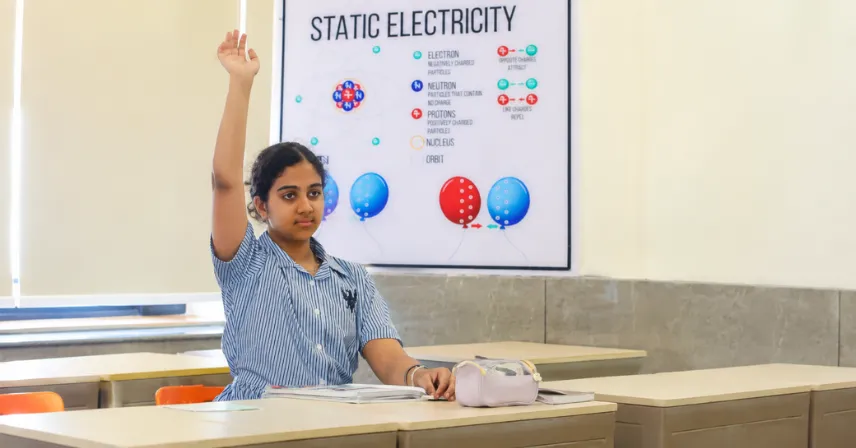
The Cambridge pathway is an international academic framework offered through Cambridge Assessment International Education (CAIE). It is followed by educational institutions all over the world and is widely recognised for its structured learning journey from pre-schooling to higher secondary education.
The major advantage of the curriculum is its ability to take students from comprehension to critical thinking. Rather than having students merely memorise the answers, it prompts them to comprehend concepts, apply them, analyse information, and justify their reasoning.
This is particularly important to parents since modern children require more than good scores. What they require are skills that will help them succeed in university, in international settings, in their future career paths, and in dealing with real-world challenges.
The Cambridge curriculum supports this by giving students a clear academic journey through different stages.
| Stage | Age Group | Grades | Learning Focus |
|---|---|---|---|
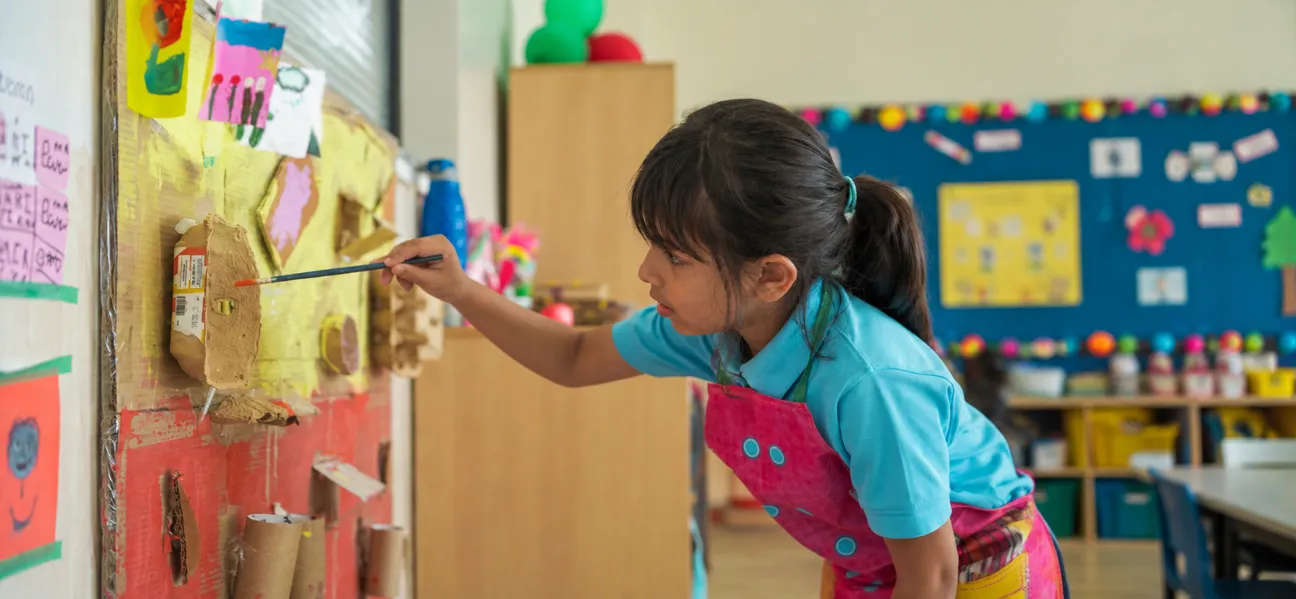
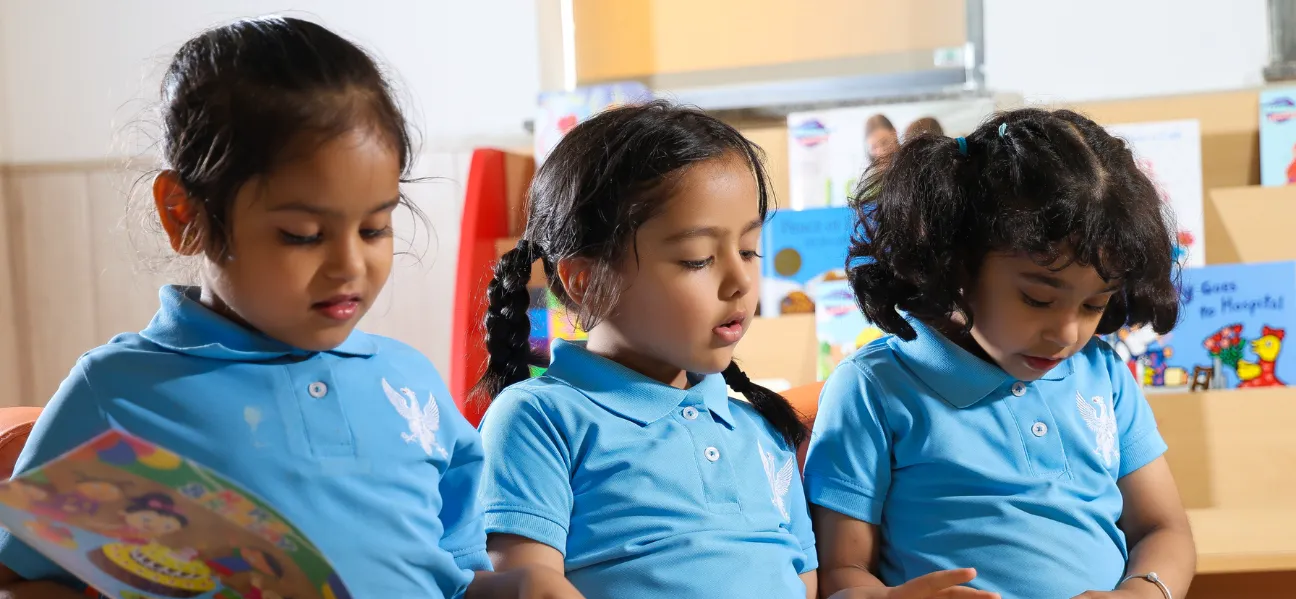
| Cambridge Early Years | 3 to 5 | Pre-Nursery to KG | Play-led, exploratory learning |
| Cambridge Primary | 5 to 11 | Grades 1 to 6 | Curiosity, core subjects, questioning, and early confidence |
| Cambridge Lower Secondary | 11 to 14 | Grades 6 to 8 | Deeper thinking, independent work, and stronger subject foundations |
| Cambridge Upper Secondary | 14 to 16 | Grades 9 to 10 | IGCSE qualifications with international recognition |
| Cambridge Advanced | 16 to 18 | Grades 11 to 12 | AS and A Level pathway for university preparation |
Cambridge Curriculum vs CBSE
CBSE is one of the most prevalent school boards in India. This is due to the familiarity, availability, and direct correlation with the Indian education system. To the student studying for JEE or NEET, the CBSE board seems quite reasonable, considering the proximity of the syllabus to the entrance requirements.
However, the Cambridge system functions quite differently. It is internationally benchmarked and gives more flexibility in subject selection. Furthermore, the system emphasises concept clarity, application, problem solving, and critical thinking. This is a key reason why parents want to know how the Cambridge curriculum stands apart when compared with CBSE.
Find the main differences summarised in the table below:
| Feature | Cambridge Curriculum | CBSE |
|---|---|---|
| Provider | Cambridge Assessment International Education | Central Board of Secondary Education |
| Structure | Primary, Lower Secondary, IGCSE, AS and A Level | Classes 1 to 12, with board exams in Classes 10 and 12 |
| Learning Approach | Concept mastery, enquiry, application, and transferable skills | National syllabus coverage, uniformity, and growing competency-based reforms |
| Subject Choice | Very flexible, with wide subject combinations | Stream-based at the senior level, usually Science, Commerce, or Humanities |
| Assessment Style | External exams with application, scenario, analysis, and problem-solving questions | Board exams with internal assessments and increasing competency-based questions |
| Strength | Global recognition, subject flexibility, and skills-based learning | Indian entrance exam alignment and wide national acceptance |
| Best For | International mobility, subject specialisation, and overseas university pathways | Indian higher education and national competitive exam preparation |
This is the main point for the parents. CBSE will be suitable for those families who are more inclined towards examinations conducted in India. On the other hand, Cambridge will be appropriate for families who desire worldwide recognition and flexibility regarding subject choice.
We at Bedford School Mohali understand this very well. Our girls require both confidence and competence in academics. And the British curriculum provides an ideal framework to build upon this.
Cambridge Curriculum vs ICSE
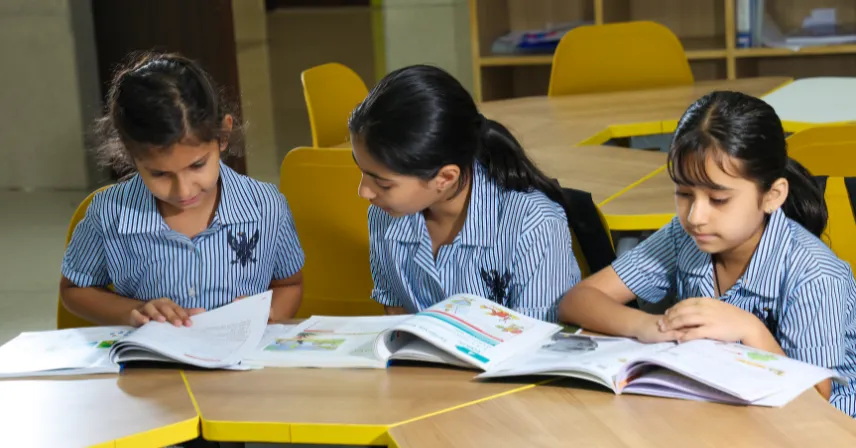
ICSE is respected for its academic depth, detailed subject coverage, and strong English language focus. Many parents appreciate ICSE because it builds writing ability, structured answers, and broad academic foundations.
Cambridge also values depth, but it approaches learning through international benchmarking, subject flexibility, and application-based assessment. In the IGCSE stage, students build breadth across subjects. Later, at AS and A Level, they can move into deeper specialisation based on their interests and plans.
Here is how both curriculum differs from one another:
| Feature | Cambridge | ICSE |
|---|---|---|
| Provider | Cambridge Assessment International Education | Council for the Indian School Certificate Examinations |
| Structure | Primary, Lower Secondary, IGCSE, AS and A Level | ICSE in Class 10, followed by ISC in Classes 11 and 12 |
| Learning Focus | Application, enquiry, research, communication, and transferable skills | Strong language training, broad academics, and detailed subject coverage |
| Subject Flexibility | High flexibility across disciplines | Moderate flexibility, with more prescribed subject structure |
| Depth and Breadth | Breadth at IGCSE, strong subject depth at A Level | Broad academic base with detailed content across subjects |
| Assessment Style | Application questions, structured responses, coursework or practicals where applicable | Detailed written answers, projects, practicals, and annual exams |
| Language Focus | English-medium with international contexts and foreign language options | Strong emphasis on the English language and literature |
| Best For | Global mobility, early specialisation, and skills-centred learning | Strong writing, language depth, and Indian academic pathways |
For parents trying to understand how the Cambridge curriculum stands apart, this difference is important. It not only asks students to have the knowledge, but it also asks them to use it with confidence.
Cambridge Curriculum vs IB
The IB and the Cambridge curriculum are both international programs, although their approaches are different. IB is characterised by inquiry, reflection, interdisciplinary approach, and assessment. The Diploma Programme offered in IB is made up of six subjects plus the extended essay, Theory of Knowledge, and CAS.
The Cambridge curriculum, on the other hand, takes a more subject-specific approach to education. Students get clear syllabus guidelines, enabling them to specialise in certain academic fields at A-level. This may be good for those who already have a clear leaning towards a certain field of study, such as sciences, humanities, business, design, or technology.
Common differences are as follows:
| Feature | Cambridge | IB |
|---|---|---|
| Structure | Primary, Lower Secondary, IGCSE, AS and A Level | PYP, MYP, and Diploma Programme |
| Philosophy | Subject-centred with clear syllabuses and progression | Inquiry-based, interdisciplinary, and internationally minded |
| Breadth vs Depth | Breadth at IGCSE, depth through A Levels | Six subject groups with higher and standard levels |
| Assessment | External exams with coursework or practicals in some subjects | Internal assessments, external exams, Extended Essay, TOK, and CAS |
| Workload | Often centred around final exams and subject preparation | Continuous assessments, projects, reflection, and final exams |
| University Preparation | Strong for subject-specific degree pathways | Strong in broad academic preparation and research skills |
| Best For | Students who prefer defined subject goals and early specialisation | Students who enjoy interdisciplinary study and continuous assessment |
Cambridge, CBSE, ICSE or IB: Which One Should Parents Choose?
It all comes down to choosing the best one. In truth, there is no single perfect curriculum for every child. The right choice depends on the learning style of the child, family goals, university plans, assessment preference, and the quality of the school offering the curriculum.
To make it simpler, parents can think about the choice in this way:
Choose CBSE if:
- Your child is focused on Indian entrance exams.
- You want a nationally recognised Indian board for your child’s education.
- You prefer wider availability and familiar academic routes.
- Your child is comfortable with a structured, syllabus-led approach.
Choose ICSE if:
- You want a strong English language and writing foundation.
- Your child benefits from detailed subject coverage.
- You prefer a rigorous Indian academic structure.
- Your plans are mainly connected with Indian higher education.
Choose IB if:
- Your child enjoys participating in projects, reflection, and interdisciplinary learning.
- You want continuous assessment rather than mostly final examinations.
- Your child can manage a demanding workload across several areas.
- You value research, international-mindedness, and broad academic exposure.
Choose Cambridge if:
- You want global recognition and portability for your child’s education.
- You want a British curriculum pathway that supports subject depth and specialisation.
- Your child may wish to apply to universities abroad and needs a structured pathway.
- You value flexible subject choices along with core subjects.
- Your child has clear academic goals that need direction.
These are a few reasons, but as a parent, your decision should never be based only on a board name. The school you choose for your child must also be deeply evaluated for its teaching quality, counselling, facilities, safety, values, and student support systems.
Bedford School Mohali Values Cambridge-Led Learning
We believe girls must be provided with an educational setting that equips them to think independently and participate actively. Our British curriculum fulfils this requirement by fostering learning, subject expertise, and global readiness.
Our academic approach goes beyond traditional classroom teaching. We aim for our pupils to question, articulate, research, introspect, and build confidence in their abilities. The IGCSE curriculum pathway supports this by giving students a globally recognised foundation before they move into more specialised senior study.
As a boarding school for girls, we also understand that learning does not end when lessons finish. Girls continue to grow through routines, peer interactions, monitored study periods, extracurricular activities, mentoring, and pastoral care programmes. In doing so, they gain greater responsibility and independence.
It is within this framework that the importance of our British curriculum manifests itself in how it promotes whole-person development. Intellectual education, effective communication, problem-solving skills, and confidence go hand in hand. This connects strongly with our commitment to helping girls become future-ready, not only exam-ready.
Final Thoughts
Understanding how the Cambridge curriculum stands apart helps parents make a more informed decision. It is not about saying one curriculum is good and the others are not. CBSE, ICSE, IB, and Cambridge all have value. The real question is which one fits your child’s learning style, plans, and personality.
The Cambridge system stands apart because of its global recognition, flexible subject choices, progressive structure, application-based assessment, and strong pathway transition from IGCSE to A Levels. It is suitable for parents who seek a rigorous education, international readiness, and a learning system that promotes independent thinking among their children.
At Bedford School Mohali, we see this curriculum as part of a larger promise. Our role is to combine strong academics with pastoral care, confidence-building, independence, and a girl-centred environment. As a boarding school for girls, we want each pupil to grow into a capable learner who can step into the world with clarity, courage, and purpose.