CBSE vs ICSE vs IGCSE: Which Curriculum Is Best for Your Child in 2026?
Among the many routes of education in India, the most common ones include CBSE, ICSE, and IGCSE. However, making a choice among them is never that easy for parents.
This is because of several differences in the study structure and learning methods in each of these boards.
The CBSE curriculum is based on India’s own education system and examination training.
The ICSE curriculum emphasises deep studies and a good command of the English language.
IGCSE provides a globally accepted curriculum and subject flexibility.
Thus, the real question here isn’t about which board is better. Parents need to evaluate the curriculum depending on the pupil’s learning needs, strengths, future intentions, and ability to cope with the curriculum.
This blog will help you to compare CBSE vs ICSE vs IGCSE in curriculum, subjects, assessments, recognition and future opportunities for your kids in 2026 and beyond.
Understanding CBSE, ICSE and IGCSE

Before comparing the three curricula, it is useful to understand where each one fits within a pupil’s school journey.
- CBSE: The CBSE curriculum forms part of India’s national education framework and is administered by the Central Board of Secondary Education. It covers both secondary and senior-secondary education, which means pupils can continue within the same system after Class X.
- ICSE: The ICSE curriculum leads to the CISCE Class X examination. Pupils who remain within the CISCE system usually move to ISC for Classes XI and XII.
- IGCSE: The IGCSE curriculum is generally studied between the ages of 14 and 16. It is a secondary qualification, not a Grade 12 qualification. Pupils usually continue to Cambridge International A Levels or another recognised senior-secondary programme.
This distinction is especially important for parents researching the Cambridge Assessment International Education, or CAIE board in India:
- Cambridge Primary and Lower Secondary: Giving pupils aged 5 to 14 a strong academic foundation in the early years.
- Cambridge IGCSE: For ages 14 to 16, roughly equivalent to Class 10.
- Cambridge AS and A Levels: For ages 16 to 19, approximately comparable to Grades 11 and 12.
Curriculum and Teaching Approach
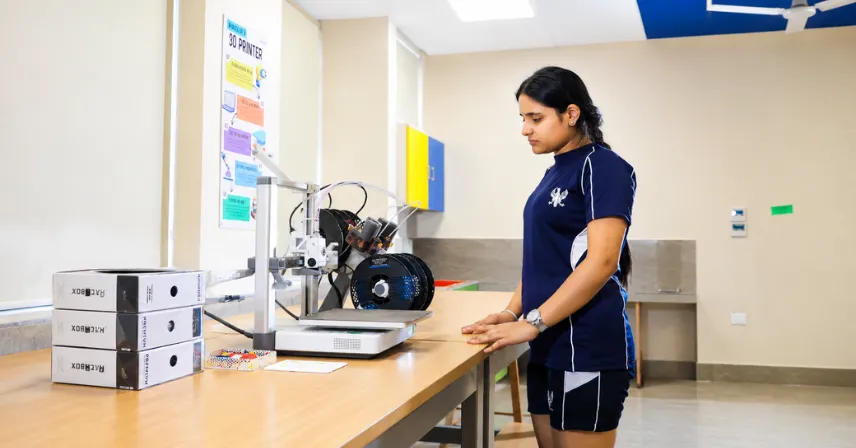
The three curricula differ in how subjects are taught and how pupils are expected to use what they learn:
- CBSE
The CBSE board follows a common national framework with clearly defined learning outcomes. The CBSE curriculum increasingly focuses on conceptual understanding, competency and the practical application of knowledge. However, the quality of classroom learning also depends on how effectively an individual school delivers the curriculum. - ICSE
The ICSE curriculum gives considerable importance to English, humanities and detailed subject knowledge. It often suits pupils who are comfortable with reading, written work and structured answers. CISCE describes ICSE as a general education examination conducted through English after a ten-year school course. - IGCSE
The IGCSE curriculum places greater emphasis on using knowledge in different situations. Pupils may be asked to analyse evidence, explain their reasoning, justify decisions, or connect ideas across topics.
Subject Choices and Curriculum Flexibility
Subject choice is another major difference when comparing CBSE vs ICSE vs IGCSE.
- At the secondary level, the CBSE curriculum includes core subjects along with optional academic and skill-based subjects. The actual options available depend on what each school is able to timetable and teach.
- The ICSE curriculum has a broad compulsory academic base, with pupils selecting additional subjects from prescribed groups.
- The IGCSE curriculum offers subjects across areas such as languages, sciences, humanities, business, computing and creative disciplines. Cambridge offers a wide range of subjects globally, but individual schools decide which combinations they can provide.
Parents considering IGCSE should therefore ask the school for its actual subject list and timetable rather than relying only on the wider Cambridge catalogue. They should also check the pathway after Class X, especially when a future university programme requires particular subjects.
Assessment and Examination Pattern

The three systems also assess pupils in different ways.
- CBSE
In many major Class X subjects, pupils complete an 80-mark board examination along with 20 marks of internal assessment. Success requires clear concepts, accurate answers and the ability to manage time well during examinations. - ICSE
The curriculum combines written examinations with project work, practical work or internal assessment where prescribed. Pupils are therefore assessed through both consistent work during the year and their final examination performance. - IGCSE
Assessment may include written examinations, oral work, practical examinations and coursework, depending on the subject. Some subjects also provide core and extended routes for pupils working at different academic levels.
Parents should not select a board on the basis of it being termed ‘easy’ or ‘difficult’. It may be a completely different case for individual pupils.
For example, a child that excels in writing essays will enjoy a particular type of examination, whereas a child that does well using practice methods might have a different preference.
Examining some specimen papers will provide parents with a much better understanding of the requirements of each syllabus.
Recognition in India and Around the World

All three routes provide an avenue into colleges and universities within India and abroad, provided that the candidate satisfies the entry criteria for the chosen course and the institution.
The Cambridge IGCSE programme holds the status of being formally recognised in India as being equivalent to Grade 10, provided that certain criteria are fulfilled.
The Cambridge International A Levels can be considered to be equivalent to Grade 12 if certain conditions are satisfied.
The Cambridge system has gained wide recognition internationally, although universities have the option of setting their own criteria for exam grading.
CBSE and the ICSE curriculum are already established within India’s education system. Foreign qualification equivalence is therefore not the main concern for these pathways.
Regardless of the board, parents should always check the specific requirements of the university and course their child may wish to pursue.
CBSE vs ICSE vs IGCSE: Key Differences at a Glance
| Area | CBSE | ICSE | IGCSE |
|---|---|---|---|
| What it is | A national education board offering secondary and senior-secondary qualifications. | A Class X examination conducted by the Council for the Indian School Certificate Examinations. | An international upper-secondary qualification offered by Cambridge International Education. |
| Typical stage | Classes IX and X, followed by Classes XI and XII. | Classes IX and X, followed by ISC in Classes XI and XII. | Usually studied between ages 14 and 16, followed by A Levels or another senior-secondary qualification. |
| Orientation | Nationally structured with a growing emphasis on competency-based education. | Broad and detailed general education. | Internationally benchmarked with flexible subject combinations. |
| Learning approach | Conceptual understanding, structured learning and application. | Detailed subject study, language skills and written expression. | Enquiry, analysis, problem-solving and applying knowledge in unfamiliar situations. |
| Subject structure | Core languages, Mathematics, Science and Social Science, with additional academic and skill subjects. | A broad compulsory base with choices from prescribed subject groups. | More than 70 subjects are available globally, although individual schools decide what they offer. |
| Assessment | Board examinations supported by internal assessment and school-based activities. | Written examinations with projects, practical work or internal assessment in prescribed subjects. | Written, oral, practical or coursework assessment depending on the subject. |
| Grading | Marks and grades according to CBSE assessment rules. | Marks and grades under CISCE regulations. | Usually A* to G, with 9 to 1 grading available in certain contexts. |
| Recognition* | Widely recognised in India and abroad. | Widely recognised in India and accepted internationally. | Internationally recognised and accepted as equivalent to Grade 10 in India when specified requirements are met. |
| Competitive exam preparation | Often aligns more directly with NCERT-based preparation for JEE and NEET. | Provides strong subject depth but may require adjustment to NCERT terminology and formats. | Builds analytical skills but may require additional NCERT mapping and entrance-exam practice. |
| Curriculum flexibility | Moderate at the secondary level, with more choice in Classes XI and XII. | Moderate within CISCE’s prescribed subject groups. | High, depending on the subjects and timetable offered by the school. |
*Recognition requirements can vary according to the qualification, subjects studied and individual institution.
What Cambridge Education Looks Like at Bedford School Mohali
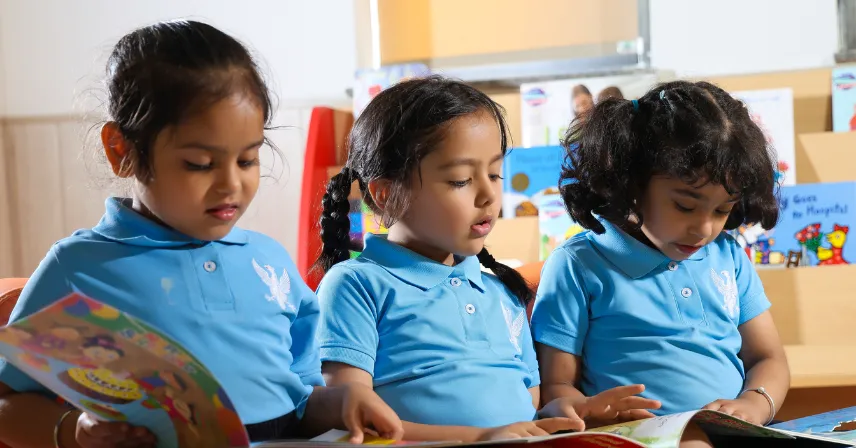
At Bedford School Mohali, pupils follow a continuous Cambridge pathway which starts from Early Years and Primary through Lower Secondary and IGCSE.
Academic programmes include core subjects, global perspectives, personal development, computing, design, robotics, arts, languages, and sport. Our school also draws on the 470+ years of educational heritage of Bedford School UK.
Families looking for the best boarding school for girls in India would be impressed with Bedford School Mohali’s combination of all-girls schooling, day and boarding school options, a purpose-built 14-acre campus and a carefully followed pastoral approach.
Cambridge learning takes place through an inquiry-based approach, subject specialist teaching, feedback and extracurricular activities.
For parents, there is always an option to check on the IGCSE subjects offered at the school if you are looking at enrolling for the CAIE board in India.
It must be noted that the board itself is not enough to finalise a particular school for your child. It is also important to have a good curriculum, teachers, pastoral support, and whole-person development-oriented extracurricular activities.
In this regard, Bedford School Mohali, comes among the best boarding schools for girls in India and aims to help girls become independent thinkers and participate actively in their learning process.
Final Verdict
There is no single winner when comparing CBSE vs ICSE vs IGCSE. The most suitable curriculum depends on the child’s learning style, academic strengths, plans, and the quality of teaching offered by the school.
The Cambridge curriculum may appeal to pupils who value subject flexibility, enquiry and an international academic structure. Indian boards may provide greater familiarity for pupils planning to follow more traditional domestic academic pathways.
For families looking for the best boarding school for girls in India, the wider school environment deserves just as much attention as the board itself. Teaching quality, subject options, pastoral care and opportunities beyond academics all influence a child’s education.